


From Journeys to Predictions: Smarter Pathways to Growth
We combine customer journey analytics with predictive models to map every touchpoint that drives conversions. As a digital marketing consulting agency, we help brands identify what works today and use forecasting in digital marketing to predict tomorrow’s outcomes.
Why Customer Journey Prediction Matters
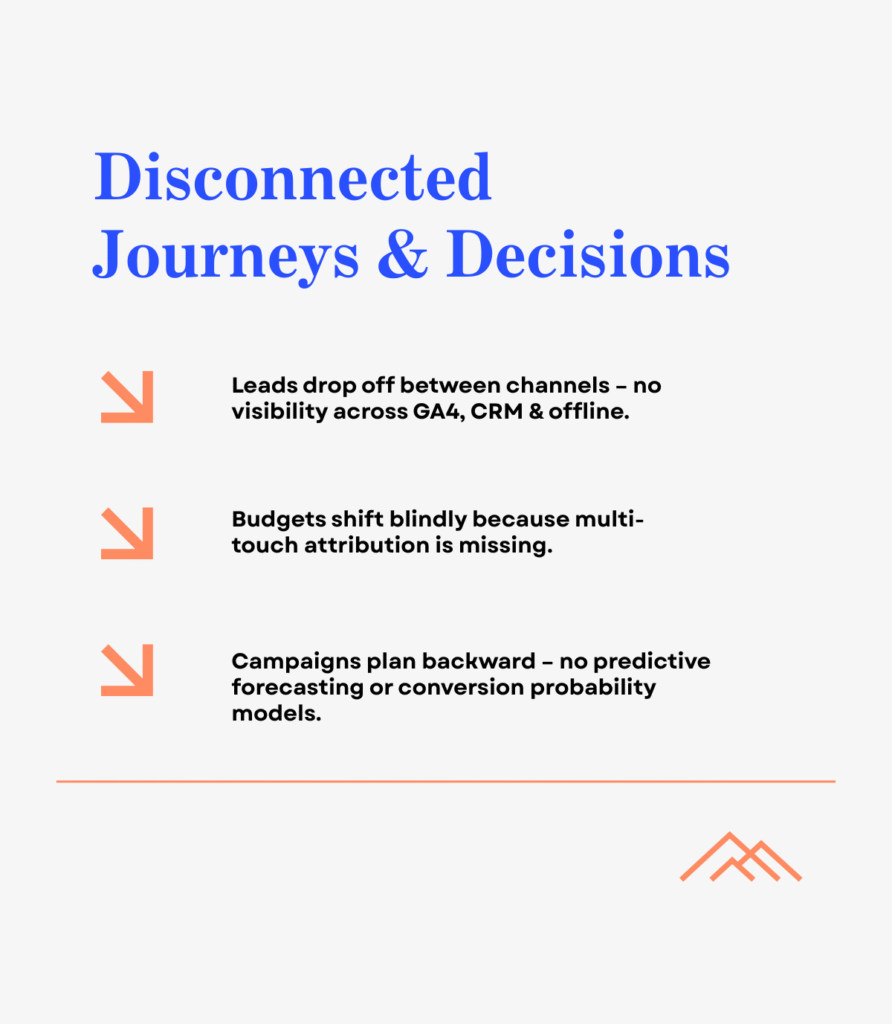
Customers rarely convert in one click. They interact with ads, search, CRM, and offline before buying. Without customer journey mapping services, brands misread where conversions truly come from.
As an attribution modeling agency, Ditatics shows which touchpoints add value and which drain budget. With predictive customer insights, we give foresight into demand, seasonality, and channel ROI.
Our Execution Framework
1.Journey Mapping Across Channels
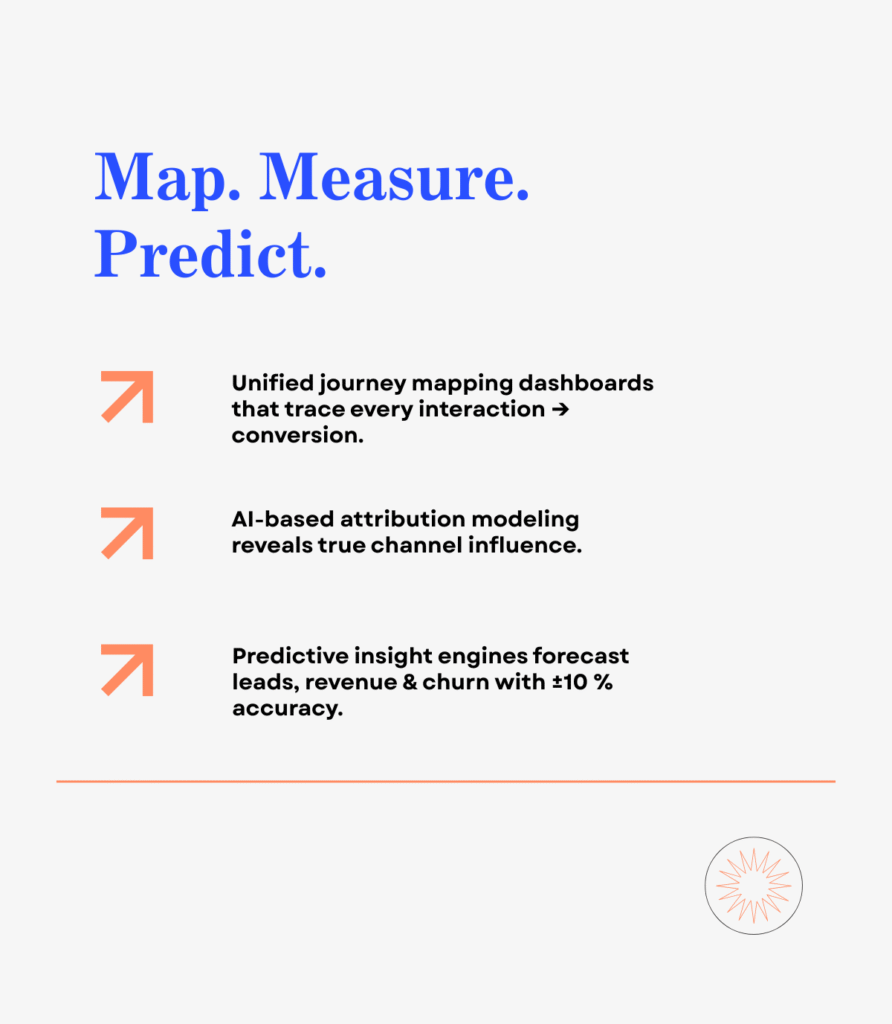
We unify ads, CRM, and offline data into one view — enabling customer journey mapping services that reflect real paths.
2.Attribution & Conversion Clarity
As an attribution modeling agency, we apply multi-touch attribution to identify true conversion drivers.
3.Forecasting & Predictive Insights
We deliver predictive customer insights with scenario modelling and forecasting in digital marketing, helping you allocate budgets smarter.
Tools We Use
- GA4: Journey mapping & multi-touch attribution
- GTM: Event-based conversion tracking
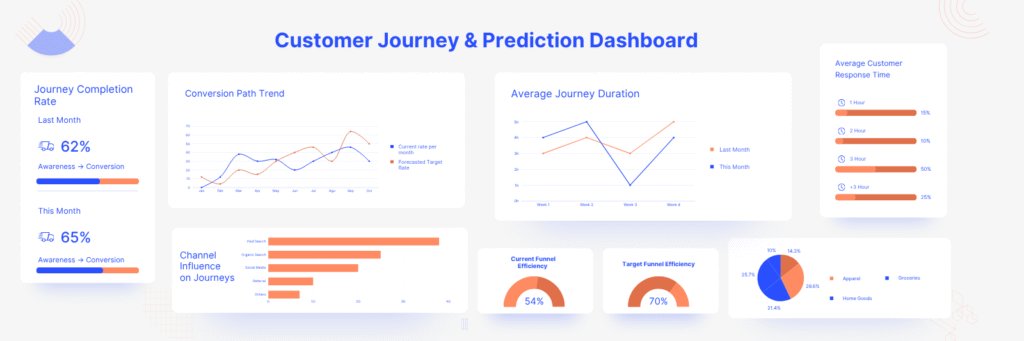
- Power BI & Looker Studio: Journey dashboards
- Python Models: Forecasting & simulations
- Supermetrics: Cross-channel integrations
Execution in Action
We’ve helped retail, FMCG, and real estate brands uncover drop-offs, reallocate spend, and predict future demand.
- Jewellery brand: 60% of walk-ins influenced by video ads.
- FMCG client: 35% fewer stockouts after forecasting demand.
- Real estate developer: -18% CPL after attribution revealed Google Search drove leads.
This makes us the go-to digital marketing consulting agency for predictive growth.
“Discover how journey mapping leads to predictive growth.”
FAQs
Customer journey analytics helps businesses understand how customers interact with their brand across different marketing channels before making a purchase or enquiry. Ditatics analyzes customer touchpoints, including advertisements, websites, search engines, and CRM interactions, to identify patterns in customer behavior. These insights help businesses improve customer experiences, reduce conversion barriers, and make more effective marketing decisions.
Customer journey mapping identifies the different stages customers go through, from initial awareness to final conversion. By analyzing interactions across Google Ads, Meta Ads, websites, and other touchpoints, Ditatics helps businesses identify where potential customers lose interest or abandon their journey. These insights support improvements in messaging, landing pages, customer engagement, and overall conversion performance.
Attribution modeling helps businesses understand how different marketing channels contribute to leads, conversions, and sales. Instead of assigning all credit to the final interaction, attribution models examine the influence of multiple customer touchpoints. Ditatics uses attribution analysis to help businesses evaluate channel performance, identify valuable marketing interactions, and allocate advertising budgets more effectively.
Predictive customer insights use historical marketing data, customer behavior, and statistical models to estimate future outcomes. Ditatics applies forecasting techniques to identify potential demand trends, seasonal variations, lead generation opportunities, and campaign performance scenarios. These insights help businesses plan marketing budgets, prepare for changing customer demand, and make proactive decisions. Forecasts are estimates rather than guaranteed results.
Yes. Customer journey analytics can connect digital marketing interactions with offline business activities when relevant data is available. Ditatics helps businesses combine advertising, website, CRM, and offline conversion information to understand how digital campaigns influence enquiries, appointments, store visits, and purchases. This is particularly valuable for real estate, retail, and jewellery businesses where customers often interact online before converting offline.